
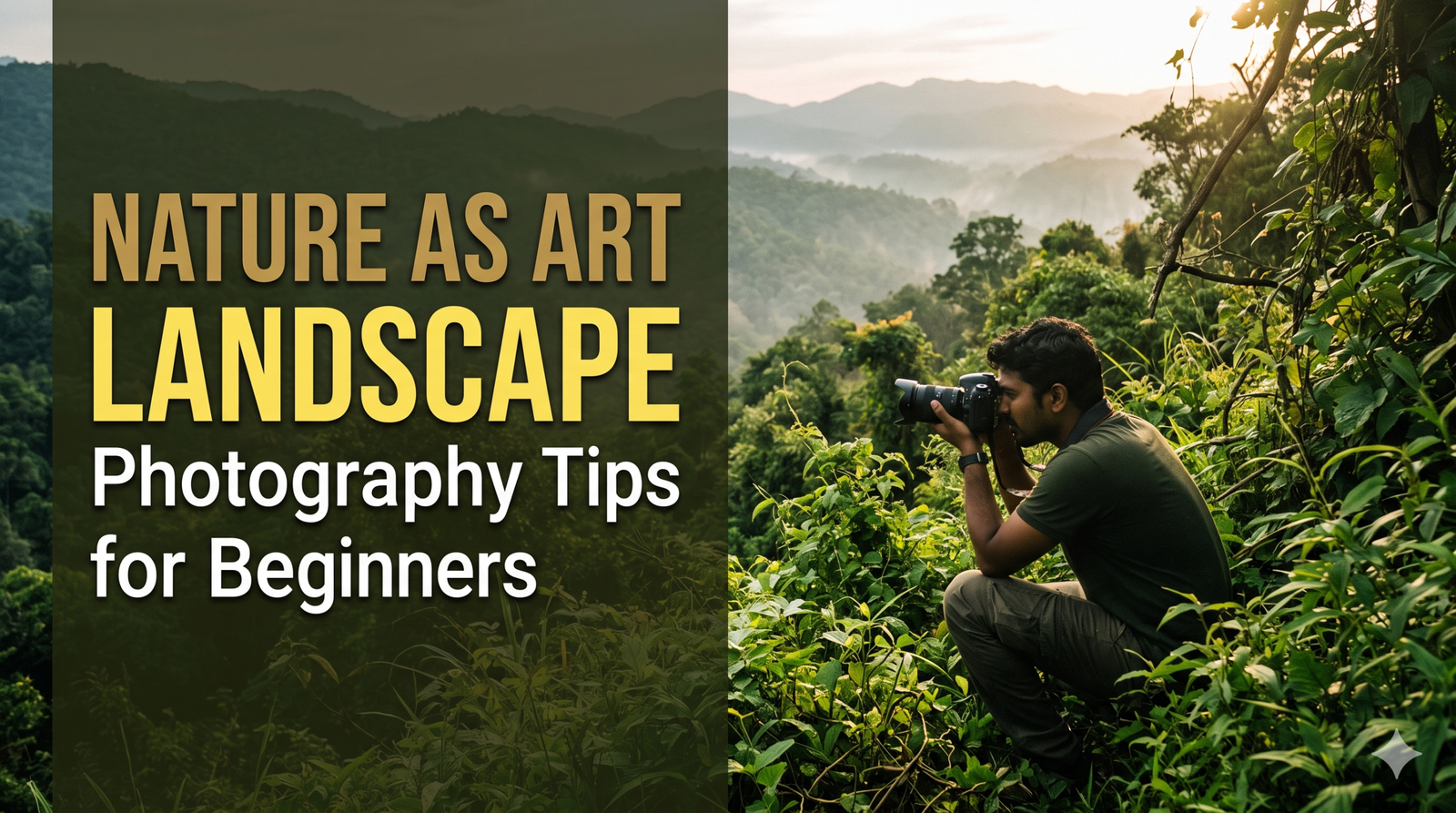
The monkeys kept moving while I adjusted my shutter speed, and the sun kept moving too. A mother monkey stepped out of the bushes and crossed the stone path, holding her baby close to her belly. Two seconds went by. That was all I had. There was no time to change settings or check the corners of the frame, so I pressed the shutter and hoped for the best. The alternative was leaving empty-handed. Moments like that taught me more than any book did. The best landscape photography tips don’t involve buying a four-thousand-dollar camera or memorising exposure charts. They come down to noticing what others miss and knowing when to take the shot. Over the years, three things have helped me most: looking at a spot before I pick up the camera, managing light, and avoiding the silly mistakes I used to make. I’ll walk you through each one below. Starting Out on a Beat-Up Nokia Phone The nature photographer began this journey back in school. The mother had a Nokia XpressMusic phone. The camera had a megapixel count. The nature photographer used it to capture everything: puddles in the driveway cracked plaster walls stray dogs resting on the porch and the study table. The nature photographer did not understand range. The nature photographer just loved capturing moments and looking at them later. Everything changed when the nature photographer started college to study Digital Film Production. Learning cinematography changed the nature photographer’s vision. The nature photographer began to notice details: how afternoon sun slices razor‑wedge across an alley how cool blue shadows highlight dirt tones. How lowering the chin by six inches changes the entire mood of a scene. Places the nature photographer had lived in for a decade suddenly looked new. That change is still at the heart of the nature photographer’s approach. Taking nature photography is not about collecting postcards of landmarks to prove a trip. It is about capturing the details that make the nature photographer stop walking. Keep the Camera in Your Bag for the First Ten Minutes When arriving at a trailhead or riverbank the nature photographer’s hands reach for the camera instinctively. The nature photographer must pause. The camera should stay in the bag. Just walk around. Breathe slowly. Where do shadows fall? Does the sunlight light up the grass? Does it skim across the dirt showing texture? Is there a shaped rock or a piece of driftwood near the bank that could fill half the frame? Nine times out of ten the nature photographer’s first idea is lazy. If the nature photographer walks twenty paces down the bank ducking under a branch or waits five minutes for a cloud to drift over the sun the scene becomes much better. Give the scene a second. The hills do not go away. Stop Fighting the Light You Have Light changes the feeling of a nature photography shot. A rocky hillside seems peaceful and gentle at 6:30 AM blistering and empty at 1:00 PM and grim under a grey sky. Hard direct sun: shadows, bright highlights and a lot of contrast. Overcast rainy skies: no glare, rich green colors and wet rock textures. The nature photographer often talks about the hour—a time around dawn and dusk. The amber light is nice. The nature photographer should not pack up just because the sky turns grey and flat. Overcast days act like a softbox reducing reflections and making forest scenes or waterfalls look rich and smooth. Even strong midday sun can look striking if the nature photographer looks for shadows or switches to black and white. Work with the light that nature provides that day than being upset about a sun that is not there. My 5-Step Process: Landscape Photography Tips You Can Use Todayld I do not follow a list. Nature is untidy. The nature photographer must go with what’s happening in front of the nature photographer. Generally this is how the nature photographer’s mind works through a scene: 1. Look without looking through the lens. Walk while keeping your eyes on the scene not the lens. Notice how your eyes move. 2. Find the subject. Every good photo has one thing. A third? Wait…?? We want : 4. Clean up the edges. Observe the corners carefully. Are tree branches intruding into the frame like spider legs? Is there trash on the trail? Move forward. Adjust the framing to eliminate the clutter. These landscape photography tips work because they slow you down before you shoot. 5. Take one test shot then check and change your angle. Take a test photo. Look at the histogram to make sure the white areas in the photo are not too bright. Then crouch down move to the left try an angle and take another photo. After the photo is set modify the settings. Keep the ISO low, like 100 or 200 to keep noise low. Stop the lens to f/8 so that the boots and the horizon stay sharp. Then set the shutter speed depending on whether you hold the photo or put it on a rock. Composition: Stop Trying to Fit the Whole World in the Lens Many photographers pull out a lens and try to fit the whole mountain range into one photo. That is a mistake. That never works. The photo looks dull because everything looks tiny and flat. Good composition is about removing parts of the photo of adding more. Choose one thing. If the mountain peak is the subject do not let a parking lot or gravel strip take up half of the photo. Remove that part. Get low. Eye‑level photos look like vacation pictures because that is how most people see the world. Crouch among the leaves. Climb onto a boulder. Raise the lens an inches above the ground. Add layers. A photo looks like a picture on a screen. To give depth add layers. Put a mossy rock in front of the feet let the lake sit in the middle and put
Google Search Is Becoming AI Search: The Impact of AI Search on Brands
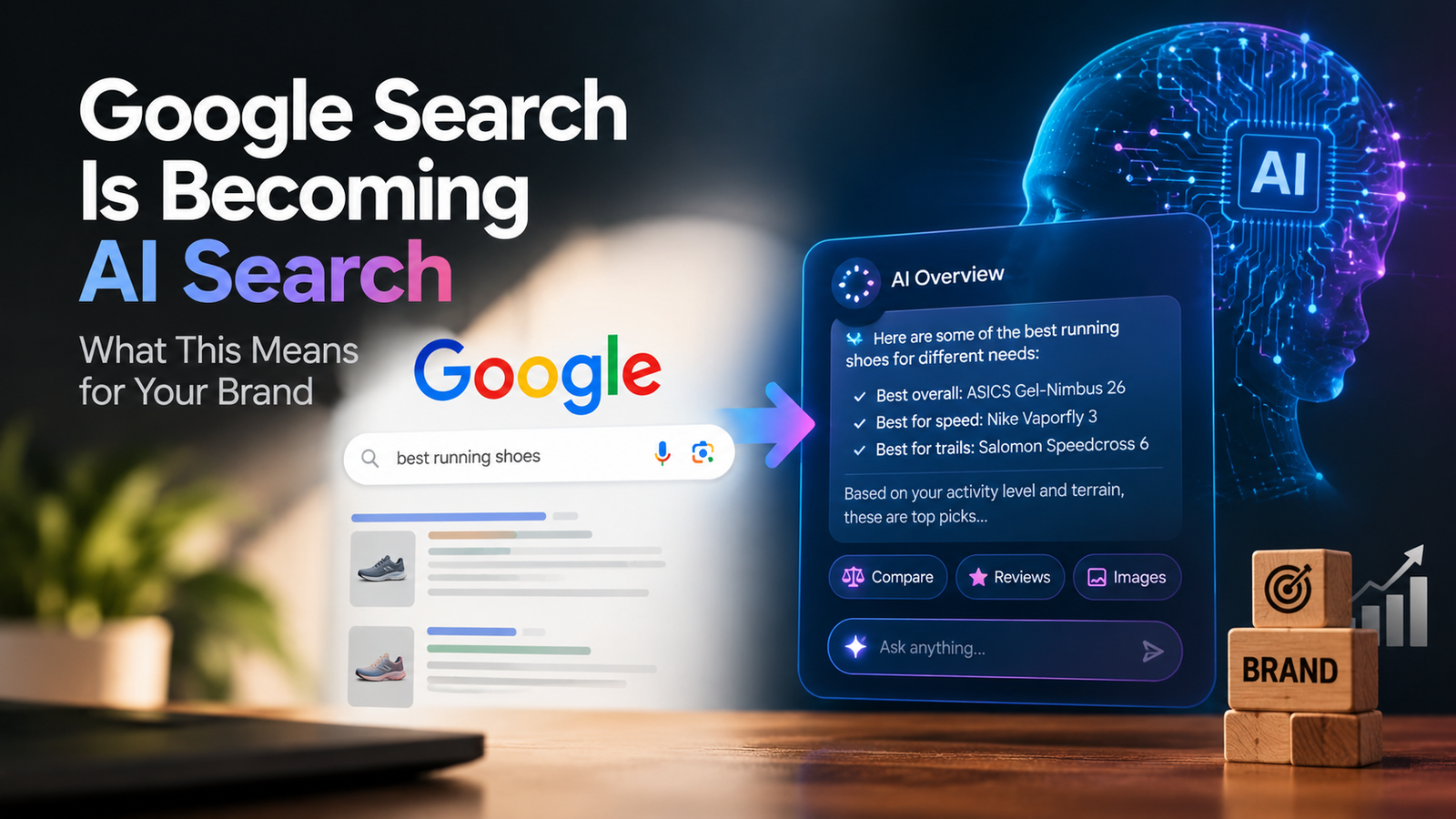
Google Search Is Becoming AI Search: What This Means for Your Brand Search results no longer look the way they did two years ago. Google now places AI-generated answers above the links. That shift is the impact of AI search on brands since indexing. Many articles say you must reinvent your SEO strategy overnight. I disagree. Here is what is actually changing what is not and how I approach it. What Is Changing in Google Search? The Impact of AI Search on Brands Google AI Overviews answer a question directly on the results page. Users often get what they need without clicking anything. For brands that creates two effects at once: • Fewer clicks on some queries. A page can rank well. Still get traffic if the AI answer covers the basics. • New visibility opportunities. Clear trustworthy pages can be cited as sources inside the answer. Research backs up the click concern. A Pew Research Center analysis found that users clicked results often when an AI summary appeared. So the worry is real. The AI summary is not the end of search. The Impact of AI Search on Brands: Risks and Opportunities Think of Google AI Overviews brand visibility as a layer on top of rankings. You can now be visible in two ways: as a ranked link and as a cited source. Traditional Search AI-Powered Search Main goal Rank and earn the click Be cited and trusted Key Rankings clicks Clicks, impressions citations Content that wins Relevant, optimized pages structured pages Biggest risk Losing rank Losing clicks despite ranking The skills behind both columns overlap heavily. That is why I don’t call this a discipline. The Biggest Mistake Brands Make When Adapting to AI Search The common mistake I see is panic. Brands read a headline. Start chasing AI- tricks. They publish content in bulk. They rewrite pages that were already performing. This usually backfires for three reasons: • Bulk content is generic and generic content rarely earns citations. • Rewriting everything at once makes it impossible to see what worked. • Pages that ranked well may lose that ranking after a rewrite. Is Generative Engine Optimisation (GEO) a New Skill for Brands in the Age of AI Search? You will see the term engine optimization for brands now. It describes making your content more likely to appear in AI-generated answers. Here is my honest view. Most of engine optimization for brands is SEO with a label. Google’s own guidance on AI features says the same fundamentals apply: content, crawlable pages and a good user experience. The new part is measurement. You now have to watch whether your brand appears in AI answers and the tools for that are still immature. My 8-Step Process for Helping Brands Navigate the Impact of AI Search This process builds on what works of replacing it. Step 1: Audit Current SEO Performance to Understand the Impact of AI Search Open Google Search Console and Google Analytics. Review traffic, impressions, click-through rates, rankings and conversions. Find which pages perform well and where visibility or traffic is slipping. Step 2: Understand Audience Behaviour and Search Intent in the Age of AI Search Look at what people ask and which problems they want solved. Don’t chase high-volume keywords. A smaller question that your audience truly cares about converts better. Step 3: Analyse Search Results to Understand How AI Search Impacts Brands Search your topics. Study what appears. Check AI Overviews where featured snippets, People Also Ask boxes and competing pages. Note which sources get referenced and what gaps exist. Step 4: Improve Content Quality and Credibility to Strengthen Brand Visibility in AI Search Write content thats new, true and useful. Answer questions in a way. Give examples. Show that you know the topic well and back up points with sources. Do not write pieces just to increase word count. Step 5: Strengthen Your SEO Foundations to Improve Brand Visibility in AI Search Look over SEO, page speed, mobile friendliness, internal links, structured data and crawlability. Make the important information easy for both readers and search engines to read. Step 6: Build Topical Authority and Brand Trust to Improve Visibility in AI Search Do not publish posts that focus on keywords. Create content that centers on your brand’s expertise. Earn backlinks, industry mentions and reviews. These signals help build your reputation. Step 7: Monitor AI Search Visibility Alongside Traditional SEO Performance Track clicks, impressions, rankings, conversions and engagement. When you can check if your brand or content shows up in answers. One honest limitation: AI Overview visibility is not a metric in reporting tools. Treat it as one piece of a picture never the measure of success. Step 8: Test, Learn and Improve Look at the results. Change one element at a time. If a page gets impressions. Few clicks ask if the search intent, the title, the content or a change in the results page is responsible. Make a fix then measure again. service business has a guide page that gets impressions but a low click‑through rate. After looking at the results page you notice an AI Overview answering the question. Rather than rewrite the guide add a title, a specific example and original advice that the Overview does not provide. Then observe the click‑through rate for a weeks. A Want Help Auditing Your Website’s SEO and AI Search Visibility? Common Questions About Brands and AI Search Do Brands Need to Abandon Traditional SEO in the Age of AI Search? No. Seo, content, search intent, usability and brand credibility still drive rankings and citations. Can I track my brand in Google AI Overviews? too partially. Standard reporting tools do not show AI Overview visibility as its metric so combine Search Console data with checks of your queries. Should Brands Publish Content to Improve Visibility in AI Search Answers? Not just for volume. Original, accurate, expert content attracts attention. Repetitive articles dilute your authority. Does AI Search Optimisation Advice Work for Every Brand? Not always.